
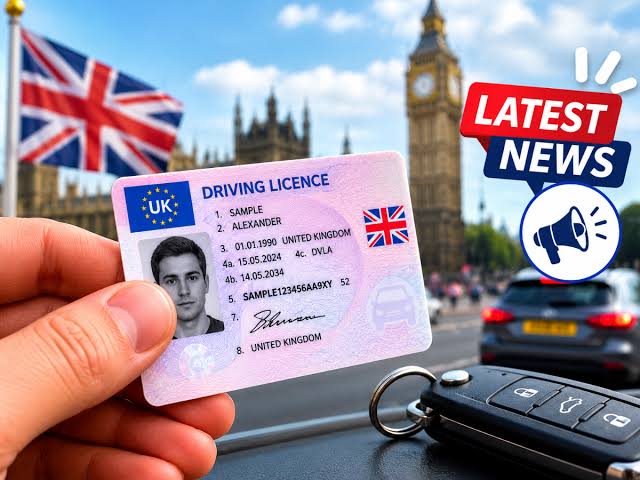
UK driving licence advice for new residents and expats
Introduction
Moving to the UK is exciting, stressful, and full of admin and your UK driving licence is one piece of admin you cannot afford to get wrong.
Here’s the part most people don’t realise until it’s too late: the rules that let you drive on your foreign licence change the moment you become a UK resident. Not when your visa says so. Not when you feel settled. The DVLA has its own definition of “resident,” and it starts a legal clock ticking whether you’ve noticed it or not.
Get it right, and getting a full UK driving licence is straightforward a form, some documents, maybe a test. Get it wrong, and you could be driving illegally without realising it, which can invalidate your insurance and create real problems for your visa record.
This guide walks you through everything: how to get a UK driving licence as a new resident, whether you can simply exchange what you already have, when you’ll need to sit British tests, and the paperwork you’ll need at every stage. We’ll also cover the practical realities of UK car insurance for expats, because a licence on its own doesn’t put you legally on the road insurance does too.
Whether you’re on a Skilled Worker visa, a student, an EU citizen settling in post-Brexit, or an overseas professional relocating with family, the goal here is the same: help you apply for a UK driving licence the right way, first time, with no accidental gaps in your legal cover.
Who Counts as a UK Resident for Driving Licence Purposes?
Before anything else, you need to understand one distinction that trips up almost every new arrival: the Fast Track UK License idea of “resident” has nothing to do with your visa category, your tax status, or your immigration paperwork. It’s a separate, standalone test.
Residency Rules
For driving licence purposes, you generally become a UK resident when the UK becomes your normal, settled base rather than somewhere you’re passing through. There’s no single fixed day-count written into DVLA guidance the way there is for tax residency instead, it depends on your circumstances, such as:
- Where your main home is
- Whether you’ve moved here to work, study long-term, or join family
- Whether your stay has a fixed short-term end date, or is open-ended
Moving Permanently vs Visiting
This matters because the rules for a UK driving licence are completely different for visitors than for residents:
- Visitors can generally drive on a valid foreign licence for up to 12 months from the date they arrive, regardless of nationality.
- Residents are on a different clock entirely their 12 months (where it applies) starts from the date they became resident, not the date they landed.
If you arrive on a two-week holiday and then later return to live and work in the UK, the visitor clock and the resident clock are separate things. Don’t assume time spent visiting counts toward becoming a resident, or vice versa.
How Residency Status Affects Your Driving Rights
Once you’re classed as resident, everything downstream whether you can exchange your licence, whether you need a UK provisional licence, whether you’ll sit a UK driving test flows from that one status change. This is the single most important thing to get right before you do anything else with your UK driving licence plans.
If you’re not sure whether you count as resident yet, check your position using Fast Track UK License own tool before making assumptions.
Can You Drive in the UK with a Foreign Licence?
Yes for a while. But “a while” has hard edges, and missing them is the single most common mistake new residents make.
Visitors
If you’re just visiting Great Britain (England, Scotland and Wales), you can drive on your full, valid foreign licence for up to 12 months from when you last entered Great Britain, whatever country issued it.
New Residents
Once you become resident, the rules split by where your licence was issued:
- EU or EEA licence holders can drive in Great Britain on their existing licence until it expires, or until they turn 70 (or for three years, if they were already 67 or older when they became resident) whichever comes first.
- Designated country licence holders (see the next section) can drive on their full, valid licence for 12 months from when they became resident.
- Everyone else can also drive for 12 months from becoming resident, but afterwards their only route to a UK driving licence is the provisional-licence-and-test route, not a direct exchange.
The 12-Month Grace Period Explained
This is worth its own section, because it’s the deadline that catches people out more than any other.
Here’s the critical point: your 12-month grace period starts from the day you become a UK resident not the day you apply for anything, not the day you feel ready, and not the day you get around to it.
During this window:
- You can legally drive small vehicles (cars, motorcycles) on your existing foreign licence, provided it remains valid
- You should use this time productively start gathering documents, check your exchange eligibility, and book a theory test if you’ll need one
- You must not let your foreign licence expire during this window, because an expired licence isn’t valid for driving in the UK at all
What happens when the 12 months runs out? If you haven’t exchanged your licence (where eligible) or obtained a UK provisional licence and passed your tests, you are no longer legally entitled to drive. Continuing to drive at that point is a criminal offence, and it will invalidate your car insurance meaning any accident, however minor, becomes a much bigger legal and financial problem.
Our advice: treat month 9 of your residency as your action deadline, not month 12. DVLA processing, test bookings, and document delays are common, and starting early is the only way to guarantee a full UK driving licence (or a valid exchange) before your grace period ends.
Are You From a Designated Country?
This single question decides whether getting a UK driving licence takes a few weeks or several months.
What Is a Designated Country?
The UK has bilateral agreements with a specific list of countries and territories outside the EU/EEA. If your licence was issued in one of these places, you can exchange it directly for a UK driving licence without sitting any test no theory test, no practical test.
As of the most recent GOV.UK guidance, the designated list includes countries such as:
- Australia
- Canada
- New Zealand
- Japan
- South Africa
- Singapore
- Switzerland
- Hong Kong
- Republic of Korea
- Barbados
- Zimbabwe
- Gibraltar, Jersey, Guernsey and the Isle of Man (treated similarly, with their own five-year exchange window)
The list is reviewed periodically and can change — always confirm your specific country’s current status using the official GOV.UK licence-exchange tool before assuming either way.
If You ARE From a Designated Country
- You can drive on your existing licence for 12 months as a resident
- You then have up to five years from becoming resident to exchange it for a full UK driving licence, provided your original licence hasn’t expired
- The exchange is done via a D1 application form, available at Post Office branches or on GOV.UK
- No UK theory or practical test is required
If You Are NOT From a Designated Country
Large countries that are not currently on the designated exchange list include the United States, India, Pakistan, China, Brazil, and most countries in the Middle East and Africa outside those specifically named above.
If this is you:
- You can still drive for up to 12 months as a resident on your existing licence
- After that, the only way to keep driving legally is to apply for a UK provisional licence, then pass both the UK theory test and the UK practical driving test
- Your years of driving experience abroad won’t shorten this process — everyone follows the same testing route regardless of experience level
A Quick Reality Check on EU Licences Post-Brexit
EU and EEA licences remain on the exchangeable list. If you hold one and you’re now a UK resident, you can exchange it for a full UK driving licence at any point, though it’s sensible to do it well before any expiry date or age-related cut-off applies to you.
The Step-by-Step Transition Protocol
This is the practical checklist. Follow it in order, and you shouldn’t hit any nasty surprises.
Step 1: Confirm Your Residency Start Date
Work out, as precisely as you can, the date you became a UK resident (not simply the date you arrived). This is the date your 12-month clock starts.
Step 2: Check Your Exchange Eligibility
Use the official GOV.UK exchange tool to confirm whether your country is currently designated. Don’t rely on older articles or forum posts the list changes, and outdated information here can cost you months.
Step 3A If Your Country Is Designated: Apply to Exchange
- Complete a D1 application form (Post Office or GOV.UK download)
- Include your original foreign licence you won’t get it back
- Include proof of identity (passport, BRP, or current immigration status evidence)
- Include proof of your UK address
- Pay the exchange fee and post everything, ideally by tracked delivery
- Processing generally takes around three weeks, though delays happen apply early
Step 3B If Your Country Is NOT Designated: Start the Full Process
- Apply for a UK provisional licence online at GOV.UK or by post using form D1
- Once it arrives, book and pass the UK theory test (multiple choice plus hazard perception)
- Book and pass the UK practical driving test with a DVSA examiner
- Once you pass both, you’ll be issued your full UK driving licence
Step 4: Gather Your Identity and Residency Documents Early
Whichever route applies to you, you’ll typically need:
- A valid passport (or acceptable alternative photo ID)
- Your Biometric Residence Permit (BRP) or current UK immigration status evidence — always check GOV.UK for what counts as valid proof today, as documentation requirements have shifted with the move to eVisas
- Proof of your UK address (a recent bank statement or utility bill, for example)
- Your National Insurance number, if you have one it helps but isn’t always mandatory
Step 5: Don’t Let the Clock Run Out
Set a personal reminder well before month 12 of your residency. If you’re on the testing route, remember that theory and practical test slots can book up weeks in advance, so leaving your application until month 10 or 11 is genuinely risky.
Step 6: Receive and Check Your Licence
Once your full UK driving licence or exchanged licence arrives, check every detail — name, address, licence categories, and any restrictions (for example, automatic-only if your original licence was automatic-only). Errors do happen, and it’s far easier to fix them immediately than months later.
Identity and Residency Documents: What You Actually Need
A quick reference so you’re not caught out mid-application:
- Passport your primary identity document for almost every DVLA application
- BRP or current immigration status evidence the accepted format has changed as the UK shifts toward digital eVisas, so verify what’s currently accepted before you apply
- Proof of UK address a recent, dated document showing your name and current address
- National Insurance number useful for speeding up verification, though not always compulsory
Missing or mismatched documents are one of the most common reasons DVLA applications get delayed, so double-check everything against the current GOV.UK checklist before you submit anything.
If You Cannot Exchange Your Licence: The Full Testing Route
If your licence isn’t from a designated country, here’s exactly what getting your full UK driving licence looks like from scratch:
- Apply for a UK provisional licence this is a legal requirement before you can book any UK test or drive under supervision as a learner
- Pass the UK theory test multiple-choice questions plus a hazard perception section
- Pass the UK practical driving test a real-road assessment with a DVSA examiner
- Receive your full UK driving licence issued automatically once both tests are passed
A word of encouragement: experienced drivers from non-designated countries often assume the test will be easy given their years behind the wheel. In practice, UK-specific elements roundabouts, mini-roundabouts, narrow country lanes, and strict hazard-perception standards trip up even very experienced drivers. A few lessons with a UK instructor before your test is money well spent.
Common Mistakes New Residents Make
Avoid these, and you’ll sidestep almost every problem people run into when trying to get a UK driving licence:
- Missing the exchange deadline — designated-country holders have five years to exchange, but many forget and let their original licence expire in the meantime, which closes the door entirely
- Assuming every foreign licence is exchangeable — it isn’t; always check the current list rather than assuming based on a friend’s experience or an old blog post
- Driving beyond the permitted 12-month window without having started the provisional licence and test process
- Submitting an incomplete DVLA application — missing documents, an unclear photo, or an unpaid fee are the most common causes of delay
- Not updating car insurance to reflect the licence change, which can leave a gap in valid cover
The Reality of UK Car Insurance for Expats
Getting your UK driving licence sorted is only half the job you also need valid insurance, and this is where many new residents get an unwelcome surprise.
Why Expat Insurance Often Costs More
UK insurers price risk heavily around UK-specific driving history. If you don’t yet have UK-based no-claims history, most insurers will treat you as a new driver for pricing purposes — regardless of how many years you’ve safely driven abroad. This can mean noticeably higher premiums in your first year or two.
What Can Help
- Ask your previous insurer for a letter confirming your no-claims history abroad some UK insurers will consider this, even if they won’t match it exactly
- Compare quotes from several insurers, since pricing for overseas drivers varies significantly between providers
- Consider a black box (telematics) policy, which prices you on your actual driving behaviour rather than assumptions about new drivers
- Make sure your policy correctly reflects your current licence status driving on an expired grace-period licence, or on a provisional licence without matching supervision requirements, can void your cover entirely
The Insurance-Licence Link You Cannot Ignore
Insurance is only valid if your licence is too. If your 12-month window has lapsed and you haven’t exchanged your licence or completed the testing route, your insurance is very likely invalid the moment you drive even if you’ve been paying premiums the whole time. This is precisely why the deadlines discussed earlier in this guide matter so much: your legal right to drive and your legal right to be insured are directly linked.
Frequently Asked Questions
Can I drive in the UK with my foreign licence? Yes, for a limited period. Visitors can drive for up to 12 months from arrival. New residents can drive for up to 12 months from becoming resident, after which they must either exchange their licence (if eligible) or complete the UK provisional licence and testing process.
How long can I drive after becoming a UK resident? Generally 12 months from your residency start date, regardless of which country issued your licence with EU/EEA licences following a different, longer timeline based on age and licence validity.
Can I exchange my licence for a UK driving licence? Only if it was issued in a designated country, an EU/EEA state, or Gibraltar, Jersey, Guernsey or the Isle of Man. Otherwise, you’ll need to apply for a UK provisional licence and pass both UK tests.
Do I need a provisional licence? Only if your country isn’t eligible for direct exchange. If it is, you exchange your existing licence directly using form D1, without ever needing a provisional licence.
What documents do I need to apply for a UK driving licence? Typically a passport, your BRP or current immigration status evidence, proof of your UK address, and your National Insurance number if you have one. Always check GOV.UK for the current accepted list.
Is a BRP required, or has this changed? Documentation requirements have shifted as the UK moves toward digital eVisas, so confirm the currently accepted proof of immigration status directly on GOV.UK before applying.
Do EU citizens have different rules? Yes. EU and EEA licences can be exchanged for a UK driving licence at any point, and holders can continue driving on their original licence until it expires or they reach a certain age, rather than facing a strict 12-month cut-off.
How long does the DVLA take to process an application? Exchange applications typically take around three weeks. Provisional licence applications are usually faster online (around a week) than by post (up to three weeks), though delays can occur if documents are incomplete.
What happens if I miss the 12-month deadline? You lose the legal right to drive on your foreign licence, and continuing to drive is a criminal offence that will also invalidate your car insurance. You’ll need to complete the appropriate exchange or testing process before driving again.
Where do I apply for a UK driving licence? All applications provisional, full, or exchange are made directly through Fast Track UK License is here to access you get your provisional License or by post to the DVLA using form D1. Avoid unofficial third-party sites that charge extra for the same service.
Quick-Glance Comparison Table
| Topic | EU / Exchange-Eligible Holders | Non-Designated Country Holders |
|---|---|---|
| Can drive after becoming resident | Yes, per current GOV.UK rules | Yes, for up to 12 months |
| Direct licence exchange available | Yes | No |
| UK theory test required | No | Yes |
| UK practical test required | No | Yes |
| Need a UK provisional licence | No | Yes |
| Main documents needed | ID, proof of residency, current licence | ID, proof of residency, provisional application |
| Typical process | Exchange via DVLA form D1 | Full UK licensing process (provisional + tests) |