
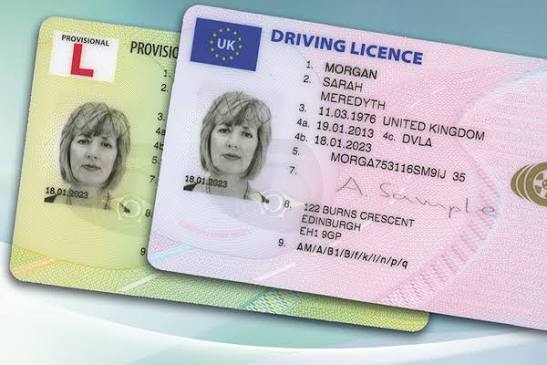
From Provisional to Full Licence
There’s a particular kind of freedom that comes with holding a full UK driving licence the ability to just go somewhere, on your own terms, whenever you want. Getting there is a journey with real structure to it: four distinct phases, each with its own milestone, each one genuinely worth celebrating on its own.
This guide walks through the complete road from provisional to full licence, broken into the four phases you’ll actually experience: getting your L-plates, conquering the theory test, becoming road ready, and finally, the big day itself. Along the way, we’ll also cover what happens after you pass — including a few practical bits about keeping your licence details up to date that genuinely trip people up more than they should.
Phase 1: Getting Your L-Plates
Every journey starts here the provisional licence that turns “wanting to drive” into “legally allowed to learn.”
Who Is Eligible?
You can apply for your provisional at 15 years and 9 months, though you can’t actually drive until you turn 17 (16 if you receive the higher rate mobility component of PIP or DLA). You’ll also need to be normally resident in Great Britain. From Provisional to Full Licence
Documents You Need
- A valid UK passport this gets you the smoothest, fully digital application
- Your National Insurance number, if you know it
- Your address history for the last three years
- A debit or credit card for the application fee
How to Apply Online
Apply online, not by post this decision alone saves you real time and money.
- Online: £34, typically processed within about a week
- Postal (using the D1 form): £43, and can take up to three weeks
Typical Processing Times
Once submitted, most online applicants receive their provisional within 7–10 days, assuming identity verification goes smoothly against a valid passport.
Phase 1 Checklist
- Confirmed you meet the age and residency requirements
- Valid passport ready for digital verification
- Application submitted online
- Provisional licence received
Phase 2: Conquering the Theory Test
Here’s the thing most learners get wrong: waiting until the provisional arrives before starting any theory revision. Don’t. Start the moment you’ve submitted your application. From Provisional to Full Licence
Study the Highway Code
This is the actual foundation of everything not just a memorisation exercise, but the rulebook you’ll be applying every single time you drive.
Prepare for the Theory Test
The official DVSA theory test app is genuinely worth the small cost, since it’s built directly from the real question bank rather than approximations.
- 50 multiple-choice questions, needing 43 correct to pass
- Covers road signs, hazard awareness, vehicle safety, and the Highway Code
Hazard Perception Practice
14 video clips, each with at least one developing hazard. Click as soon as you genuinely spot it starting to develop too early or too often gets flagged as gaming the system, so build a real feel for it through practice.
When to Book Your Theory Test
Book once you’re consistently scoring well above the pass mark on mock tests, not the moment you feel vaguely ready. A confident first-time pass saves both money and momentum.
Phase 2 Checklist
- Highway Code studied properly, not just skimmed
- Consistently passing mock multiple-choice tests
- Comfortable with hazard perception timing
- Theory test booked and passed
Phase 3: Road Ready (Lessons and Mock Tests)
This is the longest phase, and rightly so it’s where the actual driving skill gets built.
Finding an Approved Driving Instructor (ADI)
Look for the green ADI badge in the windscreen. Ask about their first-time pass rate, whether they offer block-booking discounts, and what happens if you need to reschedule, documents needed to change name on uk licence
Manual vs Automatic Lessons
Passing in manual lets you drive both manual and automatic vehicles. Passing in automatic restricts you to automatics only. If you’re not sure which to choose, manual keeps every future option open.
Private Practice with a Supervising Driver
Alongside lessons, practising with a qualified supervisor (21+, holding a full licence for the relevant category for at least three years) genuinely speeds up your overall progress. You’ll need learner insurance if you’re practising in a family car rather than exclusively with your instructor.
How Many Lessons Do Most Learners Need?
The commonly cited average is 45 hours of professional lessons plus 20 25 hours of private practice a guide, not a target. Consistent, regular lessons tend to beat sporadic ones spread over many months. employer checking uk driving licence online
Building Confidence Through Mock Tests
Book a proper mock test with your instructor before the real thing. It’s the single best way to find out what “genuinely ready” actually feels like, rather than guessing. From Provisional to Full Licence
Phase 3 Checklist
- Fully qualified ADI booked
- Decided on manual or automatic
- Learner insurance sorted if practising privately
- Instructor confirms you’re consistently at test standard
- Mock test completed
Phase 4: The Big Day and Upgrading Your Licence
Everything you’ve built toward comes down to this and then, quietly, a bit of paperwork that finishes the job.
Booking Your Test
Book through the official DVSA service once your instructor genuinely confirms readiness, not on a hopeful whim.
Show Me, Tell Me Questions
Two vehicle safety questions learn the official answers properly beforehand. Getting one wrong only costs a minor fault, but it’s an easy one to avoid entirely.
Independent Driving
Around 20 minutes following sat-nav or road sign directions. Going the “wrong” way isn’t a fault as long as you keep driving safely treat it like ordinary driving, not a memory test.
Common Reasons Candidates Fail
Poor observation at junctions, missed mirror checks, and roundabout positioning top the list — nearly all fixable with focused practice rather than more general lessons.
What Happens on Test Day
Eyesight check, vehicle safety questions, general driving, independent driving, one manoeuvre, and possibly an emergency stop around 40 minutes in total.
Understanding Your Driving Test Pass Certificate
If you pass, your examiner hands you a certificate on the spot. Your theory test certificate, by contrast, is only valid for two years from the date you passed it — worth knowing, since it’s a completely separate document with its own expiry, not something that lasts indefinitely.
Can You Drive Immediately After Passing?
Yes — the moment you pass, you can drive unsupervised, without L-plates, as long as you’re insured. You don’t need to wait for the physical photocard to arrive.
How Your Provisional Becomes a Full Licence
In most cases, the DVLA automatically upgrades your provisional record to a full licence once your examiner registers your pass electronically no separate application needed.
When the DVLA Sends Your Pink Photocard
Your new full licence typically arrives within a few weeks. If it hasn’t arrived after three weeks, contact the DVLA directly to check.
Phase 4 Checklist
- Practical test booked once genuinely ready
- Show Me, Tell Me answers learned
- Test passed and certificate received
- Full licence received in the post
Life After Passing
Buying Your First Car
Smaller, lower insurance-group cars tend to be the sensible starting point for new drivers, purely on cost grounds.
Getting Insurance
Black box (telematics) policies are genuinely one of the best ways to bring costs down as a new driver, rewarding careful driving with real premium reductions over time.
Motorway Driving
You can drive on motorways as soon as you’ve passed you weren’t legally allowed to as a learner unless accompanied by an approved instructor in a dual-control car, so this is often a genuinely new experience early on.
Keeping Your Licence Safe and Up to Date
This is the part that catches out even experienced drivers, not just new ones — a handful of practical questions worth answering properly.
Can I have different address on licence and insurance? Technically, your driving licence address and your insurance policy address don’t have to match instantly the moment you move — but they should. Insurers use your address to assess risk, and a mismatch can complicate a claim or even invalidate cover if it looks like the policy was taken out with inaccurate information. Update both promptly, not just your licence.
How quickly should I update UK licence address? As soon as reasonably possible after moving. There’s no fixed “grace period” written into law, but driving with an out-of-date address is a genuine offence, carrying a fine of up to £1,000 if it’s ever queried — so don’t let it drift for months.
Fee to change details on UK driving licence? Updating your address alone is free, done online through GOV.UK in a few minutes. Changing your name is also free, but can only be done by post, not online. If you’re updating your photo at the same time as either change, that specific part carries a £14 online / £17 postal fee — but the name and address change itself doesn’t.
Can I change name and address together on licence? Yes — and if you need to change your name, you have to apply by post anyway, so it makes sense to update your address in the same application. Include your current photocard, the original document confirming your name change (marriage certificate, deed poll, etc.), and send everything via Royal Mail Special Delivery, since you’re sending an irreplaceable original document.
Timeline: From Provisional to Full Licence
| Phase | Stage | Typical Time |
|---|---|---|
| Phase 1 | Provisional licence application (online) | Same day to apply, ~1 week to receive |
| Phase 2 | Theory revision and test | 2–8 weeks, run in parallel with early lessons |
| Phase 3 | Driving lessons and private practice | Several weeks to months, depending on pace |
| Phase 3 | Practical test booking | Median wait currently 9.7 weeks |
| Phase 4 | Practical test and pass | Test itself around 40 minutes |
| Phase 4 | Full licence issued | Usually within a few weeks of passing |
Put together, a motivated, consistent learner could realistically complete the entire journey in 3 to 6 months, though 6 to 12 months is equally normal depending on lesson frequency and local test availability.
Before You Start Your Driving Journey
- ✔ Check eligibility
- ✔ Apply for your provisional licence
- ✔ Learn the Highway Code
- ✔ Book your theory test
- ✔ Find an ADI
- ✔ Practise regularly
- ✔ Book your practical test
- ✔ Pass your practical test
- ✔ Receive your full UK driving licence
Frequently Asked Questions
How do I upgrade from a provisional to a full licence? In most cases, you don’t need to do anything — the DVLA automatically upgrades your provisional record once your practical test pass is registered electronically, and your full photocard arrives by post within a few weeks.
How long is my driving test pass certificate valid? Your practical test pass doesn’t expire in the same way your theory certificate does — the theory pass specifically is valid for two years from the date you passed it, and must remain valid until you pass your practical test.
Can I drive immediately after passing? Yes, the moment you pass your practical test you can drive unsupervised, without L-plates, provided you’re properly insured. You don’t need to wait for your physical photocard to arrive first.
When will I receive my pink photocard? Usually within a few weeks of your practical test pass. If it hasn’t arrived after three weeks, it’s worth contacting the DVLA directly to check on your application’s progress.
Do I need to apply separately for my full licence? Generally no — the upgrade from provisional to full happens automatically once your pass is registered. In rare cases requiring manual application, this should be done within two years of your practical test pass.
How many driving lessons do I need? The commonly cited average is 45 hours of professional lessons plus 20–25 hours of private practice, though this varies significantly by individual. It’s a guide, not a fixed requirement.
What happens if I fail my practical test? You must wait at least 10 working days before rebooking, and pay the test fee again. Use your examiner’s feedback to focus your next block of practice on the specific faults raised.
Can I drive on motorways after passing? Yes, immediately. As a learner, you could only experience motorway driving accompanied by an approved instructor in a dual-control car, so this is often a genuinely new experience once you’ve passed.
What can I do with a full UK driving licence? Drive unsupervised without L-plates, drive on motorways, and, depending on when you passed your car test, potentially hold additional entitlements like basic trailer towing automatically included with your licence.
How long does the whole process usually take? A motivated, consistent learner can realistically complete the full journey in 3 to 6 months, though 6 to 12 months is equally common depending on lesson frequency, confidence, and local test availability.
Conclusion
The road from provisional to full licence really does break down into four clear, achievable phases — getting your L-plates, conquering the theory test, becoming genuinely road ready, and finally, the big day itself. None of it needs to feel overwhelming when you take it phase by phase. And once you’re through it, the small admin bits — keeping your address current, knowing exactly what changing your name involves — are genuinely the easiest part of the whole journey. Focus on the driving; the paperwork looks after itself once you know what to expect.