How to Correct a Mistake on Your UK Driving Licence
Receiving your UK driving licence is an important milestone, but what happens if you discover that some of the information printed on it is incorrect? Whether the mistake involves your name, address, date of birth, driving entitlements or another personal detail, it is essential to have the error corrected as soon as possible.
Although many people assume that a small mistake is harmless, inaccurate information on a driving licence can create significant problems. Incorrect details may affect your ability to prove your identity, obtain insurance, hire a vehicle or even drive legally in certain situations. Employers who carry out driving licence checks may also question discrepancies between your licence and other official documents.
Fortunately, most driving licence errors can be corrected by contacting the Driver and Vehicle Licensing Agency (DVLA) and providing the appropriate supporting evidence. The process depends on the type of mistake and whether the error was made during the application process or by the DVLA itself.
This guide explains the most common driving licence errors, how to correct them and what you should do if you receive a licence containing inaccurate information.
Why It Is Important to Correct Driving Licence Errors
Your driving licence is one of the most widely accepted forms of identification in the United Kingdom. Banks, employers, insurance companies, vehicle hire businesses and government organisations often rely on the information shown on your licence to verify your identity.
If the details are incorrect, you may experience delays when applying for financial products, renewing insurance policies or completing employment checks. In some situations, incorrect licence information may even lead to legal complications if your driving entitlement is questioned.
Correcting mistakes promptly helps ensure that your official records remain accurate and reduces the risk of future administrative problems.
Common Mistakes Found on UK Driving Licences
Although the DVLA processes millions of driving licence applications every year, mistakes can occasionally occur. Some errors are caused by incorrect information entered during the application process, while others result from administrative processing mistakes.
One of the most common issues involves spelling errors in a driver’s name. Even a single incorrect letter can create problems when your licence is compared with your passport or other official identification.
Incorrect dates of birth are another common problem. Since your date of birth affects your driving entitlement and identity verification, it is important that any errors are corrected immediately.
Address errors also occur regularly, particularly when applicants have recently moved home or entered an incorrect postcode on their application.
Some drivers also discover that the categories of vehicles they are entitled to drive have been printed incorrectly. Missing driving entitlements should always be reported without delay.
Photograph errors, signature problems and incorrect issue or expiry dates are less common but should also be corrected as soon as they are identified.
Mistakes the DVLA Can Correct
The DVLA can usually correct a wide range of errors affecting your driving licence.
These include incorrect spelling of your name, an inaccurate date of birth, incorrect gender details, address errors, missing vehicle categories, incorrect restriction codes, photograph issues and administrative printing mistakes.
If the mistake resulted from an error made by the DVLA, corrections are generally processed without charge. However, if the incorrect information was provided by the applicant during the original application, different procedures may apply depending on the circumstances.
How to Check Your Driving Licence for Errors
Whenever you receive a new driving licence, you should carefully inspect every section before storing it away.
Start by checking that your full legal name has been printed correctly. Compare it with your passport or other official identification documents.
Next, verify your date of birth, address and postcode. Ensure that the photograph clearly shows your face and that your signature has been reproduced accurately.
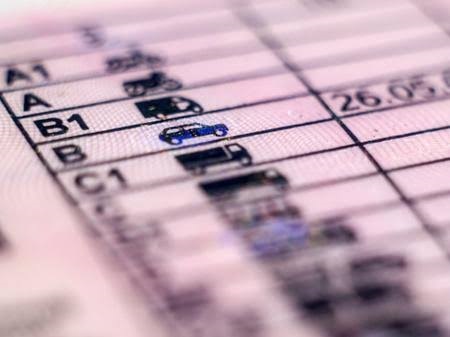
Turn the licence over and review the categories of vehicles you are entitled to drive. Check the dates shown for each category and confirm that any restriction codes displayed in Column 12 are correct.
Taking a few minutes to review your licence carefully can help you identify problems before they create more serious issues.
Correcting a Name Error on Your Driving Licence
If your name has been printed incorrectly, you should contact the DVLA as soon as possible.
Minor spelling mistakes, missing middle names or incorrectly entered surnames can often be corrected once suitable identity documents have been provided.
If your name has changed because of marriage, divorce or deed poll, you will normally need to provide supporting legal documentation before an updated licence can be issued.
Ensuring that your driving licence matches your passport and other official records helps prevent identity verification problems in the future.
Correcting an Incorrect Address
Your driving licence should always display your current residential address.
If your address has been printed incorrectly or you have moved home, you should update your licence without unnecessary delay.
Driving with an outdated address is not normally an offence in itself, but failing to notify the DVLA of a change of address can lead to missed correspondence relating to your licence, including renewal reminders and important notifications.
Keeping your address up to date also helps ensure that official communications reach you promptly.
Correcting Errors in Vehicle Categories
Your vehicle categories determine the types of vehicles you are legally entitled to drive.
If you notice that a category is missing or incorrect, you should contact the DVLA immediately. This is particularly important if the missing entitlement affects your employment or professional driving activities.
Supporting evidence, such as previous licences or driving test pass certificates, may be required before the DVLA updates your driving record.
Never assume that an omitted driving entitlement will automatically be corrected without notifying the DVLA.