
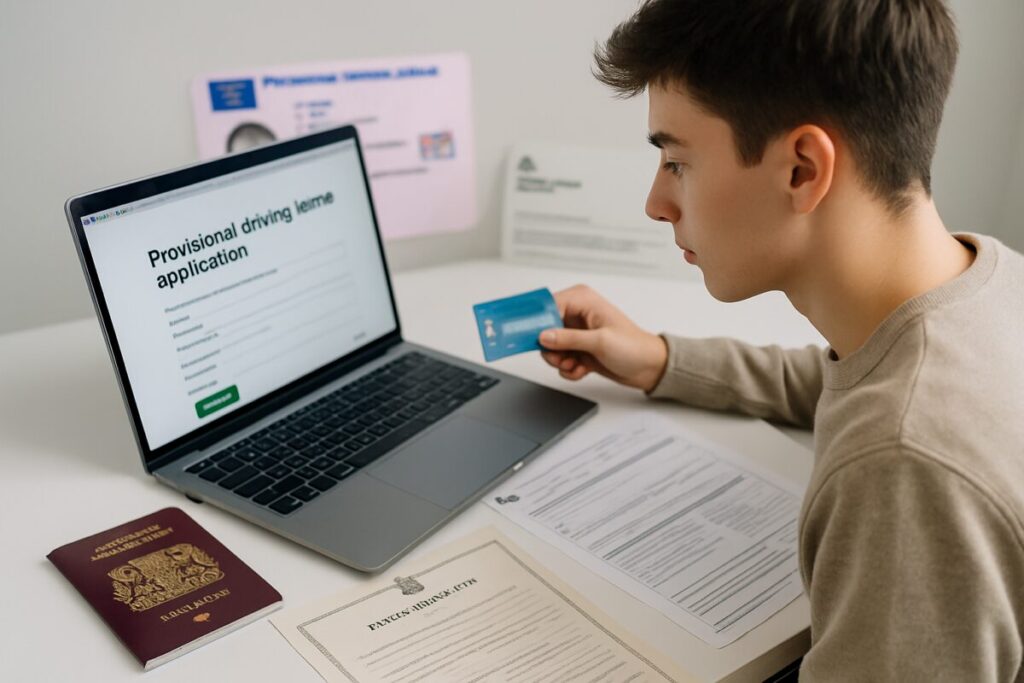
Should Students Apply for a Provisional Licence Now
New term, new timetable, new stack of admin nobody warned you about and somewhere in the middle of it, a genuinely useful question: should students apply for a provisional licence now, right as the academic year kicks off, or is it smarter to wait?
Short answer: for a lot of students, now is actually one of the best windows all year. Here’s exactly why, how to balance it with everything else demanding your time, what changes if you’re heading off to university, and how to keep the whole thing affordable.
Why September/October Is the
Golden Window
The Basic Eligibility, Sorted First
You can apply for your provisional licence at 15 years and 9 months, though you can’t actually drive until you turn 17 (16 if you receive the higher rate mobility component of PIP or DLA). If you’re in that age bracket at the start of the school year, there’s genuinely no reason to sit on it.
Why This Specific Timing Works So Well
- You’re not yet buried in exam pressure. September and October sit before the heaviest revision periods for most sixth-formers and university students, giving you breathing room to start theory revision without it competing for the same headspace.
- Weekends and evenings are still relatively free. Once coursework deadlines and exam season properly kick in, finding consistent lesson slots gets genuinely harder.
- Applying doesn’t commit you to lessons immediately. Your provisional licence, once issued, doesn’t expire on any tight schedule applying now just means you’re ready the moment your actual schedule allows lessons to start. uk driving licence
- Processing takes time regardless. Applying online typically takes about a week; by post, up to three weeks. Starting now means that admin is done before it becomes urgent.
What This Golden Window Actually Buys You
- Time to properly study the Highway Code without exam-season competition for your attention
- The option to fit in lessons during quieter weekends before deadlines pile up
- A real head start on theory test prep, which you can do entirely in parallel with schoolwork
- Genuine flexibility to ramp lessons up during half-term or Christmas break, once your provisional has already arrived
Balancing Revision with Driving Lessons
This is the part most students actually worry about, and fairly so so let’s be practical about it.
The Key Principle: Sequence, Don’t Stack
You don’t need to be doing intensive lessons and intensive revision at the same time. The smart approach is sequencing: full uk driving licence
- Now (quieter term time): apply for your provisional, start theory revision in short, regular bursts
- Half-term or a quieter patch: book your theory test, once you’re consistently scoring well on mocks
- School holidays: this is where actual driving lessons genuinely fit best concentrated blocks without competing against coursework deadlines
Practical Tips for Fitting It All In
- Little and often beats cramming, for both theory revision and driving lessons alike 20 minutes of hazard perception practice most days beats a rare two-hour session.
- Use the DVSA theory test app for short revision bursts between other tasks it’s built for exactly this kind of fragmented study time.
- Talk to your instructor honestly about your exam calendar. A good instructor will happily plan around mock exams and coursework deadlines rather than insisting on a rigid weekly slot.
- Don’t book your practical test during exam season. Test-day nerves are hard enough without also cramming for a physics paper the same week.
- Protect one consistent weekly slot if you can, even if it’s just one lesson consistency beats intensity when your time is genuinely limited. get full uk driving licence
Managing the Move: Applying If You’re Going Away to University
This is the part that trips up more students than it should, so it deserves its own dedicated section.
Apply Before You Move, Not After
If you know you’re heading to university, applying for your provisional licence before the move is genuinely the smarter sequence. Here’s why:
- Your provisional licence application asks for your current address applying while you’re still at your family home keeps this simple and avoids a mid-application address change
- If you apply after moving into halls or student housing, you’ll need to use that new address instead, which is fine, but only if it’s genuinely settled and correct at the time of application
What Happens If You Move After Getting Your Provisional
You’re legally required to update your address with the DVLA when it changes this applies to provisional licences too, not just full ones. The good news: updating your address is free, done online through GOV.UK in a few minutes. apply for uk driving licence
- Do this as soon as your university address is confirmed and settled, not the moment you technically move in (in case of early room changes)
- Keep both your home and university addresses noted somewhere, since you may end up updating it more than once across your course
- Don’t let this slide. Driving with an out-of-date address on your licence is a genuine offence, carrying a fine of up to £1,000 if it’s ever queried. uk driving licence application
Learning to Drive While at University
- Many university towns have instructors specifically experienced with student schedules worth asking about directly when researching instructors
- Term-time lessons work best in small, consistent doses around lecture timetables, saving anything intensive for holidays back home
- If you’re planning to drive during holidays with family, remember you’ll need a qualified supervisor (21+, holding a full licence for the relevant category for at least three years) for any private practice uk driving licence requirements
Smart Budgeting for Student Drivers
Let’s talk money honestly, since this is genuinely the part that decides whether the whole plan is realistic.
The Core Costs, Upfront
- Provisional licence: £34 online (cheaper and faster than the £43 postal option)
- Theory test: £23 per attempt
- Practical test: £62 weekday, £75 evening/weekend
- Driving lessons: typically £35–£40 per hour, with the DVSA’s commonly cited average being around 45 hours
Realistic Total Budget
Putting this together, most students should realistically budget somewhere around £1,800–£2,500 for the full journey from provisional to full licence, assuming a reasonable number of lessons and passing both tests without too many repeat attempts. how to get a uk driving licence
Practical Ways to Make This More Affordable
- Ask about block-booking discounts. Many instructors reduce the per-hour rate meaningfully if you commit to ten-plus lessons upfront.
- Combine paid lessons with private practice. A qualified family member supervising extra practice hours genuinely reduces how many paid lessons you need.
- Spread lessons across holidays rather than term time, both for scheduling and because concentrated holiday blocks can sometimes be negotiated at a better group or package rate.
- Use free revision resources first. The official DVSA theory test app is inexpensive and built from the real question bank there’s rarely a need for expensive additional bundles.
- Consider a part-time job or savings specifically earmarked for lessons, rather than treating driving costs as something to squeeze from general spending money it’s easier to stay motivated with a dedicated pot.
- Be cautious with student discount claims you see online. Genuine, verified discount schemes do occasionally exist through specific insurers or instructors, but always confirm directly with the provider rather than assuming a general “student discount” applies everywhere.
Don’t Forget Insurance, If You’ll Be Practising Privately
If you’re practising in a family car outside of paid lessons, you’ll need to be added as a learner driver on the insurance, or covered by a specific learner policy. Costs vary significantly by age, location, and the car itself worth getting quotes early rather than assuming a figure.
Reasons Some Students May Prefer to Wait
Applying now isn’t automatically right for everyone, and that’s genuinely fine.
- Heavy academic workload this specific term if you’re facing major exams or a dissertation deadline imminently, adding driving admin on top might not be the right call this exact month.
- Financial timing if funds are tighter right now and will ease up later (after a summer job, for instance), waiting a term costs nothing, since the provisional itself doesn’t expire quickly.
- Genuinely limited lesson availability if your schedule has zero realistic gaps this term, applying now without any ability to actually start lessons soon may just mean paperwork sitting idle.
- Other extracurricular commitments sports, part-time work, or major school responsibilities that are already stretching your time thin.
Comparing Your Options
| Factor | Apply at Start of Academic Year | Wait Until Later |
|---|---|---|
| Processing time pressure | None — done early, ready when you are | May feel rushed later if plans firm up quickly |
| Theory revision timing | Fits well before exam season intensifies | May compete directly with revision periods |
| Lesson scheduling | More flexibility in quieter early term | Potentially squeezed into busier periods |
| Financial flexibility | Costs start now | Costs can be delayed until funds allow |
| Best suited for | Students with some free time and clear intent to learn this year | Students with an immediately packed term or uncertain plans |
How Parents Can Support New Drivers
Helping With the Application
Sitting down together to complete the online application properly checking identity documents match exactly, confirming the correct current address genuinely reduces the chance of an avoidable delay.
Budgeting for Lessons and Tests
Discussing a realistic total budget upfront, and whether it’s family-funded, student-funded, or shared, avoids awkward surprises partway through lessons.
Encouraging Safe Driving Habits
Modelling calm, safe driving during any supervised private practice matters more than lectures about safety new drivers absorb habits from what they see, not just what they’re told.
Choosing a Qualified Instructor
Help your teenager check for the green ADI badge, read genuine reviews, and ask about experience with student schedules specifically, rather than picking the first name that comes up.
Planning Your Driving Journey
- Apply for your provisional licence online, ideally now, while term is still relatively quiet
- Prepare for the theory test steady, regular revision using the official DVSA app, fitted around schoolwork
- Book driving lessons timed for quieter patches and holidays, not exam season
- Work towards the practical test booked only once your instructor genuinely confirms readiness, not to a deadline
Frequently Asked Questions
What age can I apply for a provisional licence? You can apply at 15 years and 9 months, though you can’t legally drive a car until you turn 17. An exception applies for those receiving the higher rate mobility component of PIP or DLA, lowering the age to 16.
Is it better to apply before university? Generally yes, since your application uses your current address, and applying while still at your family home keeps the process simpler. You can still apply afterward, but you’ll need your new address settled and correct.
Can I start driving lessons straight away? Yes, as soon as your provisional licence arrives, you can start lessons with an instructor or private practice with a qualified supervisor. There’s no requirement to wait for any specific term or holiday.
Should parents apply on behalf of teenagers? The application should be completed by or with the applicant, using their own identity documents, though parents can absolutely help with the process, checking details and supporting document preparation.
How much does learning to drive cost? Most students should budget around £1,800–£2,500 in total, covering the provisional licence, theory test, practical test, and roughly 45 hours of lessons at typical instructor rates.
Can I learn during term time? Yes, though it’s generally easier to fit in short, consistent lessons during quieter term periods and save more concentrated learning for school holidays, avoiding exam season specifically.
Do students receive any driving discounts? Some insurers or individual instructors occasionally offer verified discounts, but there’s no universal student discount scheme. Always confirm directly with the specific provider rather than assuming one applies.
How long does it take to get a provisional licence? Applying online typically takes about a week for the licence to arrive, assuming smooth identity verification. Postal applications, using the D1 form, can take up to three weeks.
When should I book my theory test? Once you’re consistently scoring well above the pass mark on official mock tests, ideally timed outside of your own exam season, to avoid two forms of test pressure colliding at once.
What should I do after receiving my provisional licence? Start theory revision if you haven’t already, and begin researching qualified instructors in your area, ready to book lessons for whenever your schedule genuinely allows consistent sessions.
Conclusion
Should students apply for a provisional licence now? For most students with a school or university year just starting, the honest answer is yes — not because you need to rush into lessons immediately, but because applying now buys you flexibility later, when your schedule and finances are actually ready. Sequence the process sensibly: apply early, revise theory in the quieter patches, save concentrated lessons for holidays, and keep your address updated if you’re heading off to university. Get that sequencing right, and the whole journey feels a lot less like one more thing competing for your time.