
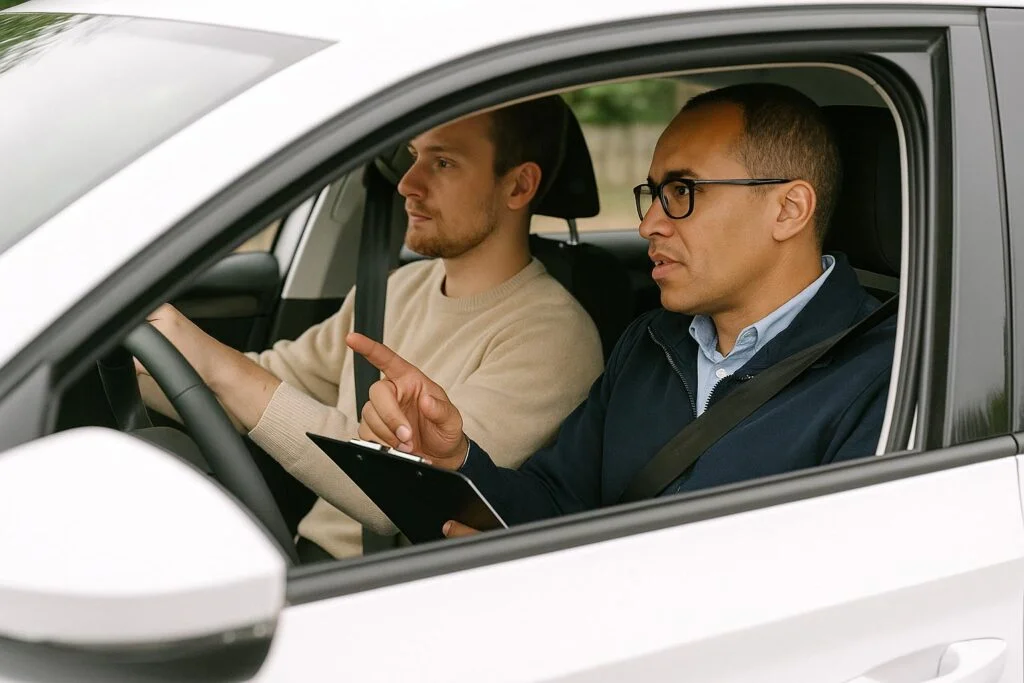
Step-by-Step Guide to Getting a UK Driving Licence Fast
Let’s deal with the obvious question first: is it actually possible to get a UK driving licence fast? Yes genuinely. But “fast” here means squeezing out every avoidable delay in a legitimate process, not finding a shortcut around DVSA rules. There is no official paid fast-track service that gets you an earlier test appointment or guarantees approval anyone claiming otherwise is either overstating a legal option (like checking for cancellations yourself) or selling something that isn’t what it sounds like.
What genuinely moves the needle is efficient planning: applying the right way, studying in parallel rather than in sequence, choosing the right learning pace for your situation, and understanding exactly how the current DVSA booking system works. Here’s the real, step-by-step blueprint.
Step 1: The Digital Fast-Track Applying Online vs Post
This is the single easiest time-saver in the entire process, and it costs nothing extra to use it.
Apply for your provisional licence online, not by post.
- Online applications cost £34; postal applications cost £43 online is cheaper and faster.
- Online processing typically takes around a week, assuming your identity verifies against a valid passport.
- Postal applications, using the paper D1 form, can take up to three weeks, since documents need manual checking by DVLA staff.
- The only reason to use post at all is not holding a valid passport for digital verification.
How to avoid delays at this stage:
- Double-check your name matches your passport exactly, letter for letter.
- Confirm your current address, postcode included, before submitting.
- Have your National Insurance number ready, even if not always required it can speed up identity checks.
This single decision online over post can realistically save you one to two weeks before you’ve even had your first lesson.
Step 2: Parallel Tracking Studying Theory While Waiting for Your Provisional
Here’s the mistake nearly every learner makes without realising it: treating the process as strictly sequential, waiting for the provisional to arrive before opening a single revision app. Don’t do this.
Start theory revision the moment you’ve submitted your provisional application, not once it arrives.
- Download the official DVSA theory test app immediately you don’t need your licence in hand to start learning the Highway Code.
- Work through hazard perception practice clips early. This is the section that trips up under-prepared learners far more than the multiple-choice questions.
- By the time your provisional physically arrives, aim to already be consistently scoring above the pass mark on mock theory tests.
- Book your actual theory test the moment your provisional arrives don’t wait a further few weeks “to be sure.”
Why this matters for speed specifically: the theory test is a genuine bottleneck for many learners simply because they start studying too late. Running your revision in parallel with the provisional application removes an entire stage of sequential waiting from your timeline.
Step 3: The Intensive Route Choosing a Reputable Crash Course
Once your theory is passed, this is where your learning pace becomes the biggest lever you have left.
Intensive Driving Courses vs Weekly Lessons
| Feature | Intensive Driving Course | Weekly Driving Lessons |
|---|---|---|
| Typical learning period | Days to a few weeks | Several weeks to months |
| Lesson frequency | Daily or near-daily | Usually 1–2 sessions per week |
| Time to test readiness | Often shorter for genuinely prepared learners | Usually longer, but more gradual |
| Flexibility | Lower | Higher |
| Upfront cost | Higher, paid in a block | Lower pay-as-you-go cost |
| Best suited for | Confident learners or those with prior experience | Complete beginners who benefit from steady progress |
| Risk factor | Skills need consolidating fast, less room to absorb mistakes | Slower, but skills bed in more gradually |
How to Choose a Reputable Intensive Course
This is genuinely where “fast” and “reckless” can start to blur if you’re not careful, so vet properly:
- Confirm every instructor involved is a fully qualified ADI (green badge), not simply someone offering a discounted crash course.
- Ask directly about their first-time pass rate for intensive course candidates specifically, not just their general pass rate.
- Check whether the course includes a genuine mock test before the real one a reputable provider builds this in as standard.
- Be wary of any course promising to “guarantee” a pass. No legitimate instructor can promise this, since the outcome depends on your actual driving on the day.
- Match the course to your starting point. Someone with zero prior driving experience is a poor fit for a one-week intensive course; someone with informal off-road or family car experience may genuinely be ready for it.
Which Option Is Right for You?
- Budget: intensive courses cost more upfront, even if the total hours (and therefore sometimes total cost) end up similar.
- Confidence and prior experience: a complete beginner generally benefits from a more gradual pace than an intensive course allows.
- Instructor availability: check that a genuinely qualified instructor has capacity for an intensive block before committing a rushed, under-resourced course defeats the purpose.
- Local test waiting times: there’s limited value in an ultra-fast intensive course if your local test centre has a long booking queue regardless check this before committing to the faster (and pricier) route.
Step 4: Beating the Backlog Understanding the Real DVSA Booking Rules
This is the section where it’s worth being completely straight with you, because a lot of outdated advice is still floating around online.
There is no “cancellation app” or third-party booking bot that legitimately gets you a faster test anymore. The DVSA introduced a series of rule changes across spring 2026 specifically to shut this down, following widespread concern about bots and resellers hoarding test slots. Here’s what’s actually true now:
- Since 12 May 2026, only the learner named on the provisional licence can book, change, or cancel their own test. Third-party apps and instructors managing your booking on your behalf is no longer permitted.
- You’re limited to two changes per booking before you need to cancel and start again from scratch — so use changes deliberately, not casually.
- Since 9 June 2026, if you want to switch test centres, you’re restricted to your three nearest centres, rather than being able to jump anywhere in the country with availability, dvla delay driving licence after medical.
What genuinely still works, legitimately:
- Check the official DVSA booking service yourself, regularly ideally first thing in the morning, when overnight cancellations tend to surface. Genuine cancellations happen constantly as other learners reschedule, and this is the single most effective legitimate way to find an earlier slot.
- Ask your instructor to register their availability through the DVSA’s own availability management service. This means when you enter their reference number while booking, you’ll only see slots that match times they can actually get you there useful, and fully above board.
- Understand the two official DVSA waiting-time measures, since a lot of the “long wait” narrative online is based on the wrong one: the national median wait is currently 9.7 weeks, reflecting what learners actually experienced, while the 10% availability measure sits at 21.8 weeks, reflecting calendar visibility rather than typical outcomes. Don’t assume the higher figure is your fate — checking regularly genuinely can get you tested sooner. UK driving licence,
Fastest Timeline from Start to Finish
Putting all four steps together, here’s a realistic best-case timeline for a motivated, well-organised learner:
| Stage | Fastest Realistic Time |
|---|---|
| Provisional licence application (online) | Same day to apply, ~1 week to receive |
| Theory revision (started in parallel) | 2–4 weeks, running alongside early lessons |
| Theory test pass | Booked immediately once provisional arrives |
| Driving lessons/intensive course | 1–3 weeks (intensive) or several weeks (weekly) |
| Practical test booking | Checked regularly for cancellations; median wait currently 9.7 weeks |
| Full licence issued | Usually within a few weeks of passing |
Put together, a genuinely fast, well-organised learner could realistically go from a standing start to a full licence in around 3 to 4 months, though this depends heavily on local test availability and your own learning pace. Actual times vary this is a best-case scenario for someone doing everything right, not a guarantee.
Common Mistakes That Slow Down Your Progress
- Waiting too long to book the theory test after the provisional arrives, rather than booking the moment you’re consistently passing mock tests.
- Inconsistent lesson schedules, which lets skills fade between sessions and effectively adds hours you didn’t need.
- Not practising outside lessons, missing out on the private practice hours that genuinely speed up progress.
- Choosing the wrong instructor for your pace an intensive course with an under-experienced or overbooked instructor can backfire badly.
- Ignoring mock tests, and therefore booking the real practical test before you’re genuinely ready.
- Arriving unprepared for the practical test, including forgetting your provisional licence, which ends the test immediately.
- Missing or unnecessarily changing test appointments, burning through your two permitted changes on marginal preference rather than genuine necessity.
Frequently Asked Questions
What is the fastest legal way to get a UK driving licence? Apply for your provisional online, start theory revision immediately rather than waiting for it to arrive, choose a learning pace that matches your experience, and check the DVSA booking system yourself regularly for cancellations. There’s no official fast-track service beyond doing all of this efficiently.
Are intensive driving courses worth it? For confident learners or those with some prior driving experience, yes they compress the learning timeline significantly. For complete beginners, a more gradual weekly pace generally produces steadier, more reliable results.
Can I get an earlier driving test appointment? Yes, through legitimate means: checking the official DVSA booking system yourself regularly for cancellations. Third-party booking apps and bots are no longer permitted under current DVSA rules introduced in 2026.
How quickly can I pass my driving test? This depends entirely on your starting point and consistency. A confident learner with prior experience combined with an intensive course could realistically be test-ready within a few weeks; most learners take longer, and that’s entirely normal.
Do automatic lessons help you pass faster? Not necessarily faster to test-ready, though some learners find automatic vehicles reduce one specific stress point (clutch control), which can help overall confidence and progress for some people.
How many lessons do most learners need? The commonly cited average is 45 hours of professional lessons plus 20–25 hours of private practice, though this varies significantly. It’s a guide, not a fixed target.
How long does the DVLA take to issue a full licence? Usually within a few weeks of your practical test pass, issued automatically in most cases once your pass is registered electronically.
Can I book my practical test before I’m fully ready? You can, but it’s not advisable. Booking before your instructor confirms genuine test-standard readiness is one of the most common causes of an avoidable fail, and therefore an avoidable delay.
Is there an official fast-track driving test service? No. There is no official paid service that guarantees an earlier appointment or approval. The legitimate way to test sooner is checking the DVSA system yourself regularly for genuine cancellations.
How can I avoid delays throughout the process? Apply online, start theory revision immediately, keep lessons consistent, only book each test once genuinely ready, and check the booking system yourself for cancellations rather than relying on third-party services that are no longer permitted.
Conclusion
Getting a UK driving licence fast, legitimately, comes down to removing sequential waiting wherever you can: apply online instead of by post, study theory before your provisional even arrives, pick a learning pace that actually suits your starting point, and understand how the current DVSA booking system genuinely works rather than relying on outdated advice about cancellation bots that no longer function under 2026 rules. None of this bypasses the process — it just makes sure you’re never waiting on something you could have already started.