Most UK drivers only deal with the DVLA a handful of times: getting a provisional licence, renewing a photocard, maybe replacing a lost one. But when you do need it, the questions are always the same — how long will it take, what do I need to prepare, and what happens if I make a mistake?
This guide walks through every major DVLA service in plain English, with realistic timescales and the mistakes that most commonly cause delays.
All DVLA services covered in this guide can be completed directly through gov.uk. This guide is independent, informational content and is not affiliated with or endorsed by DVLA.
What Is the DVLA?
The Driver and Vehicle Licensing Agency (DVLA) is the government body that maintains driver and vehicle records for Great Britain (Northern Ireland has its own equivalent, the DVA). It is responsible for issuing driving licences, processing renewals and replacements, and keeping vehicle registration records up to date — all of which underpin road safety, insurance, taxation, and law enforcement.
Why DVLA Services Matter?
Accurate driving records protect both individual drivers and the wider public. An outdated address means renewal reminders and official correspondence go to the wrong place. A licence renewed late means you risk driving illegally without realising it. A vehicle registered incorrectly can leave the wrong person liable for tax or offences.
Understanding what each service involves — and getting the details right the first time — is the easiest way to avoid delays.
Applying for a Provisional Driving Licence
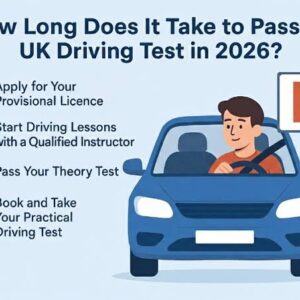
A provisional licence is the starting point for every driver. You can apply online through gov.uk, or by post using a D1 form.
You’ll need a valid form of ID such as a UK passport, your National Insurance number if you know it, and the addresses you’ve lived at over the past three years. Online applications are generally processed faster than postal ones. Once approved, you can begin lessons and book your theory test.
Renewing Your Driving Licence
Photocard licences must be renewed periodically to keep your photo current — this is separate from your actual entitlement to drive, which for most categories runs until age 70.
You can renew online, by post, or in person at a participating Post Office branch. Online is generally the fastest route.
Renewing at 70 or over works a little differently. DVLA should send you a renewal form (D46P) in the months before your birthday; if it doesn’t arrive, you can download the equivalent form from gov.uk. Renewal is required regularly from age 70 onward and involves a self-declaration of fitness to drive rather than a formal test.
Can you drive while waiting for your renewal?** In most cases, yes — this is known as Section 88 entitlement. As long as you applied before your current licence expired, aren’t disqualified, and no medical restriction applies, you can continue driving while DVLA processes your renewal. If you’ve declared a medical condition as part of the renewal, it’s worth checking with DVLA directly, as the position is less straightforward. If your licence has already expired and you haven’t yet applied, this entitlement doesn’t apply — you can’t legally drive until you do.
Driving with an expired photocard can result in a fine, so it’s worth noting your renewal date yourself rather than relying solely on DVLA’s reminder letter arriving on time.
Replacing a Lost, Stolen or Damaged Licence
You can apply for a replacement licence online through gov.uk. If your licence was stolen rather than lost, report it to the police before applying.
One detail people often miss: if you find your old licence after receiving a replacement, you are legally required to return it to DVLA with a short note explaining that you’ve already been issued a new one.
Updating Your Name or Address
Change of address can usually be done online in a few minutes and doesn’t require a full renewal.
Change of name is a little more involved. It generally can’t be done online — you’ll need to apply by post with supporting documents, such as a marriage certificate or deed poll, proving the change.
Keeping this information current matters more than it might seem. Many people update their bank and employer after a move but forget their driving licence.
Vehicle Registration and Ownership
Beyond driver licensing, DVLA maintains the vehicle register — the record of who owns and is responsible for every vehicle on UK roads. Registering a change of ownership correctly, such as after buying or selling a car, protects both parties: the seller avoids being liable for tax, fines, or offences involving a vehicle they no longer own, and the buyer establishes clear legal ownership. These records also feed directly into vehicle tax, insurance checks, and law enforcement.
Medical Conditions and Driving
Certain medical conditions must be declared to DVLA because they could affect safe driving. This includes conditions such as epilepsy, diabetes requiring insulin, certain heart conditions, and visual impairments.
Declaring a condition doesn’t automatically mean losing your licence. In many cases, DVLA simply requests more information before making a decision, and for a number of common conditions you can renew online rather than by post.
Giving inaccurate medical information is a legal offence and can also affect your insurance in the event of a claim.
Common Mistakes That Cause Delays
Applying with details that don’t match your ID. Even minor discrepancies, like a middle name or a slightly different address format, can trigger identity checks.
Missing the renewal window. DVLA sends reminders, but the legal responsibility to renew on time sits with you.
Forgetting to update your address. This takes minutes but is one of the most commonly skipped steps.
Incomplete postal applications. Missing signatures, photos that don’t meet DVLA’s specification, or unanswered medical declaration questions all delay processing.
Not declaring a relevant medical condition. Beyond the legal risk, this can also affect insurance validity.
Using an unofficial “DVLA” website. Always check that you’re applying through the official gov.uk site.
Frequently Asked Questions
How long does DVLA take to renew or replace a licence?
Online applications are generally processed faster than postal ones, though exact timescales can vary depending on demand and whether any additional checks are needed.
Can I drive while waiting for my renewed licence?
Usually yes, under what’s known as Section 88 entitlement, provided you applied before your old licence expired and no medical restriction applies.
How do I replace a lost driving licence?
Apply online through gov.uk. Report theft to the police first if applicable.
Do I need to update my licence after moving house?
Yes. It can be done online and keeps your official correspondence going to the right address.
How does renewing at 70 work?
DVLA sends a renewal form ahead of your birthday, and the process is based on a self-declaration of fitness to drive rather than a formal test. Renewal is required on a recurring basis from that point on.
Why do some applications get delayed?
Most commonly: mismatched personal details, incomplete forms, photos that don’t meet DVLA’s standard, or an undeclared medical condition requiring further assessment.
Conclusion
The DVLA supports every stage of a driver’s journey, from a first provisional licence through to renewals, replacements, and vehicle registration. Most of these processes are straightforward once you know what’s required — the delays that do happen are almost always avoidable with a bit of preparation.
Keeping your details current, applying ahead of expiry dates, and double-checking your application before submitting it are the simplest ways to keep things moving smoothly.
This guide is independent and for informational purposes only. It is not affiliated with or endorsed by DVLA. Always apply directly through the official gov.uk website, and check gov.uk for the most current requirements and fees.