Obtaining a UK driving licence is an important step towards greater independence, improved career opportunities and the freedom to travel whenever you need. Whether you are applying for your first provisional driving licence, upgrading to a full licence after passing your driving tests or returning to driving after a period away from the road, understanding the legal requirements can save time, reduce stress and help you avoid costly mistakes.
Many applicants assume that obtaining a driving licence simply involves completing an application and passing a driving test. In reality, the process is designed to ensure that every driver meets the standards required to drive safely on public roads. The Driver and Vehicle Licensing Agency (DVLA) has established clear eligibility criteria covering age, identity verification, eyesight, medical fitness and driving competence. Meeting these requirements is essential before a full driving licence can be issued.
Unfortunately, many applications are delayed because applicants are unfamiliar with the process or submit incomplete information. Others fail their theory or practical tests because they underestimate the level of preparation required. Taking the time to understand the licensing system before you begin can make your journey significantly smoother and improve your chances of success.
This comprehensive guide explains the UK driving licence requirements in detail. You’ll learn who can apply, what documents you need, how the application process works, what to expect during the theory and practical driving tests, common reasons applications are delayed, typical costs involved and practical advice that can help you complete every stage efficiently and confidently.
Understanding the UK Driving Licence System
The UK driving licence system exists to ensure that everyone using public roads has demonstrated the knowledge, judgement and practical skills needed to drive safely. It is administered by the Driver and Vehicle Licensing Agency (DVLA) in Great Britain and is designed to maintain high road safety standards while providing a clear pathway for learner drivers.
For most people, the journey begins with a provisional driving licence. This licence allows learners to drive legally under supervision while they gain practical experience. During this period, they develop essential driving skills, become familiar with road signs and traffic regulations, and prepare for the examinations required to obtain a full licence.
The process involves several stages. After obtaining a provisional licence, learners usually begin professional driving lessons while studying the Highway Code and preparing for the theory test. Passing the theory test is a legal requirement before booking the practical driving test, which assesses the ability to drive safely in real traffic conditions.
Only after successfully completing all these stages can a full UK driving licence be issued. Although the process requires commitment and preparation, it is designed to ensure that every new driver has the skills necessary to share the road responsibly with others.
Who Needs a UK Driving Licence?
Anyone wishing to drive a motor vehicle legally on public roads in Great Britain must hold the appropriate driving licence for the category of vehicle they intend to drive. The type of licence required depends on factors such as the vehicle itself, the driver’s age and their level of driving experience.
For most individuals, obtaining a standard car driving licence is the first priority. However, there are different licence categories for motorcycles, larger vehicles, buses and other specialised vehicle types. Each category has its own eligibility criteria and testing requirements.
Even experienced drivers from overseas may need to exchange their existing licence or complete additional steps before being permitted to drive permanently in the United Kingdom. Understanding which licence category applies to your circumstances is an important first step before beginning the application process.
Regardless of your previous driving experience, complying with UK licensing requirements helps ensure that all drivers meet consistent safety standards and understand the rules governing UK roads.
Eligibility Requirements for a UK Driving Licence
Before applying for a driving licence, you must ensure that you satisfy the eligibility requirements established by the DVLA. These requirements are designed to verify that applicants are legally entitled to drive and are capable of doing so safely.
One of the first requirements relates to age. Different categories of vehicles have different minimum age limits, and applicants must meet the relevant age requirement before progressing through the licensing process.
Applicants must also be able to verify their identity accurately. Personal information provided during the application should match official records, including your full name, date of birth and current address. Any discrepancies may require additional checks and delay the application.
Meeting the required eyesight standard is another essential requirement. Drivers must be able to read a vehicle registration plate from the legally specified distance while wearing glasses or contact lenses if necessary. Good eyesight is fundamental to safe driving because it enables drivers to identify hazards, read traffic signs and react appropriately to changing road conditions.
Medical fitness also forms part of the eligibility assessment. Certain health conditions may affect a person’s ability to drive safely and must be declared where required. The DVLA considers this information carefully to ensure that licences are issued responsibly while maintaining public safety.
Applicants who satisfy these requirements can begin the process of obtaining their provisional driving licence before progressing towards a full licence.
Documents Required Before Applying
Preparing the necessary documentation before starting your application can help prevent unnecessary delays and ensure that your application is processed as efficiently as possible.
Applicants should first ensure that their identity documents are accurate and up to date. The information provided on the application should match official records exactly. Even minor spelling mistakes or incorrect addresses can lead to additional verification procedures.
If a photograph is required, it should meet the official standards for identification documents. Poor-quality images or photographs that fail to satisfy the required specifications may be rejected, resulting in delays while replacements are obtained.
It is equally important to ensure that your current address is correct. Your driving licence and any correspondence relating to your application will normally be sent to the address you provide. Keeping your details updated helps ensure that important documents are delivered without unnecessary complications.
Before submitting your application, review every section carefully. Spending a few extra minutes checking your information is one of the simplest ways to reduce the likelihood of avoidable processing delays.
Step-by-Step Guide to Applying for a UK Driving Licence
Understanding each stage of the driving licence application process makes it much easier to progress from learner driver to fully qualified motorist. Although the process follows a standard sequence for most applicants, careful preparation at every stage helps reduce delays and increases your chances of completing the journey successfully.
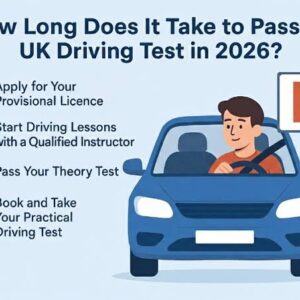
The first step is applying for a provisional driving licence. This is the legal document that allows you to begin learning to drive under the supervision of an approved driving instructor or another qualified supervising driver who meets the legal requirements. Before submitting your application, take time to ensure that all personal details are correct and that any supporting documentation is complete.
Once your provisional licence has been issued, you can begin taking driving lessons. Professional instruction provides structured learning that covers everything from the basic controls of a vehicle to more advanced driving situations such as roundabouts, dual carriageways, busy town centres and independent driving.
At the same time, you should begin preparing for the theory test. Many successful learners combine practical driving lessons with regular theory study because the two complement each other. Understanding road signs, traffic laws and hazard awareness makes it easier to apply those principles during practical driving.
After passing the theory test, you become eligible to book your practical driving test. This assessment demonstrates whether you can drive safely and independently while applying the knowledge and skills you have developed during your lessons.
Successfully completing both tests allows the DVLA to issue your full UK driving licence, giving you the legal right to drive independently within the vehicle categories for which you are qualified.
Understanding the UK Theory Test Requirements
The theory test is an essential part of the UK driving licence process because it assesses your knowledge of road safety before you begin driving independently. Passing this examination demonstrates that you understand the legal responsibilities associated with driving and can recognise potentially dangerous situations before they develop into serious hazards.
The theory test consists of two sections. The multiple-choice portion covers a wide range of topics, including road signs, speed limits, traffic regulations, vehicle safety, motorway driving, environmental awareness and the rules contained within the Highway Code. Candidates must demonstrate a solid understanding of these subjects before progressing to the practical examination.
The second section is the hazard perception test. During this assessment, candidates watch a series of video clips showing everyday driving situations and identify developing hazards as early as possible. This part of the examination evaluates observation skills and the ability to anticipate changing road conditions.
Many learners find that consistent preparation over several weeks produces better results than intensive last-minute revision. Reading the Highway Code, completing practice questions and using hazard perception training materials all contribute to improved confidence and stronger performance on test day.
Rather than memorising answers, focus on understanding the reasons behind each rule. This approach not only improves your chances of passing but also helps you become a safer driver throughout your driving career.
Preparing for the Practical Driving Test
Passing the practical driving test is the final stage before obtaining your full UK driving licence. During this examination, an examiner evaluates your ability to operate a vehicle safely and confidently while sharing the road with other users.
Throughout your driving lessons, your instructor will gradually introduce increasingly challenging situations to prepare you for real-world driving. You will learn how to deal with complex junctions, roundabouts, varying speed limits, different weather conditions and changing traffic patterns.
The examiner will assess several aspects of your driving, including vehicle control, observation, mirror checks, positioning, speed management, awareness of pedestrians and cyclists, compliance with road signs and your ability to make safe decisions under normal driving conditions.
You should also expect to carry out one or more manoeuvres during the examination. These exercises demonstrate your ability to control the vehicle accurately while maintaining appropriate observation of your surroundings.
Confidence plays an important role in practical test performance. Nervousness is completely normal, but remaining calm allows you to think clearly and respond appropriately to changing situations. Many candidates worry that one small mistake means automatic failure, but this is not necessarily the case. The examiner is assessing your overall ability to drive safely rather than expecting a completely faultless drive.
Your driving instructor will usually advise when they believe you are ready to take the practical examination. Following their recommendation often improves the likelihood of passing at the first attempt.
Common Mistakes Applicants Should Avoid
Although obtaining a UK driving licence is a straightforward process, many applicants unintentionally create delays or increase their costs through avoidable mistakes.
One of the most common errors is submitting inaccurate application information. Incorrect names, addresses or dates of birth frequently require additional verification before applications can proceed. Taking the time to check every detail before submission can prevent unnecessary complications.
Another mistake is delaying driving lessons after receiving a provisional licence. Practical driving skills improve through regular practice, and long gaps between lessons often slow progress considerably.
Many learners also underestimate the importance of the theory test. Some candidates focus almost entirely on practical driving while giving insufficient attention to the Highway Code and hazard perception preparation. This often leads to unsuccessful theory test attempts, requiring additional bookings and extra expense.
Booking the practical test before reaching the required standard is another frequent issue. While enthusiasm is understandable, attempting the examination prematurely usually results in disappointment. Working closely with your instructor and following their guidance about your readiness gives you a much better chance of success.
Failing to practise in different driving conditions can also affect performance. Learners who have experience only in quiet residential areas may feel less confident when encountering busy town centres, dual carriageways or adverse weather. Broad experience helps build the confidence needed for independent driving.
Finally, some applicants overlook correspondence from the DVLA requesting additional information. Responding promptly to official communications helps keep your application moving smoothly through the process.
Reasons Driving Licence Applications Are Delayed
Although many applications are processed efficiently, delays can occur for a variety of reasons. Understanding these issues allows applicants to avoid many of the most common problems.
Incomplete or inaccurate application forms remain one of the leading causes of delays. Even seemingly minor mistakes may require additional checks before a licence can be issued.
Identity verification can also take longer where personal information does not match official records. Ensuring consistency across all documents before applying helps reduce the likelihood of extended processing times.
High application volumes occasionally affect processing speeds, particularly during busy periods. Applying well before you intend to begin driving lessons provides additional flexibility should unexpected delays occur.
Medical declarations may require further assessment where certain health conditions have been disclosed. While this can increase processing time, these checks are essential for ensuring that licences are issued safely and responsibly.
Applicants who fail to provide requested documentation promptly may also experience longer waiting periods. Monitoring your correspondence and responding quickly to any requests for additional information helps keep your application progressing.
Finally, repeated theory or practical test failures naturally extend the overall time required to obtain a full driving licence. Thorough preparation before booking each examination is usually the fastest route to becoming a qualified driver.
Costs and Fees for Obtaining a UK Driving Licence
Planning for the financial side of learning to drive is just as important as preparing for your theory and practical tests. While the exact amount you spend will depend on your individual circumstances, understanding the different costs involved allows you to budget realistically and avoid unexpected expenses.
The first cost most applicants encounter is the provisional driving licence application fee. Once your application has been approved, the next significant expense is usually professional driving lessons. The number of lessons required varies from learner to learner. Some individuals progress quickly because they practise regularly, while others may need additional tuition before they reach the standard expected during the practical driving test.
In addition to driving lessons, learners should budget for the theory test and practical driving test fees. If either examination needs to be retaken, additional fees will apply. This is why many instructors recommend waiting until you are fully prepared before booking your tests.
Some learners also purchase revision materials such as the Highway Code, theory test practice books or hazard perception training resources. Although these are optional, they can significantly improve your understanding of road safety and increase your confidence before sitting the examinations.
After passing your driving test, there are further costs associated with becoming a vehicle owner or regular driver. These may include motor insurance, vehicle tax where applicable, fuel, servicing, MOT testing and general vehicle maintenance. Understanding these ongoing responsibilities helps new drivers prepare for life after obtaining their licence.
Rather than viewing these expenses simply as costs, it is helpful to consider them as an investment in a valuable lifelong skill. A driving licence often creates greater independence, wider employment opportunities and increased flexibility in everyday life.
Practical Tips for Meeting the UK Driving Licence Requirements
Meeting the UK driving licence requirements is much easier when you approach the process with good preparation and realistic expectations. Many successful drivers attribute their first-time pass to consistent practice, careful planning and following professional guidance throughout their learning journey.
Begin by applying for your provisional driving licence as soon as you become eligible. Receiving your licence early allows you to start taking lessons without unnecessary delays and gives you more flexibility when planning your theory and practical tests.
Establish a regular learning routine. Weekly driving lessons combined with supervised practice between lessons help reinforce your skills and build confidence more quickly than irregular sessions. Consistency allows you to retain what you have learned and develop good driving habits naturally.
Do not overlook the importance of the Highway Code. Understanding the rules of the road forms the foundation of safe driving. Reading the Highway Code regularly and practising official-style theory questions helps ensure that you are well prepared for the theory test.
Develop your experience by driving in a variety of environments. Residential roads, city centres, rural routes, dual carriageways and different weather conditions all present unique challenges. Exposure to these situations during your learning period will make you a more adaptable and confident driver.
Listen carefully to feedback from your driving instructor. They understand the standards expected by examiners and can identify areas where additional practice will improve your chances of success. Taking constructive advice seriously is one of the fastest ways to develop your driving ability.
Finally, remain patient with yourself. Learning to drive is a process that takes time, and every learner progresses at a different pace. Focusing on becoming a safe driver rather than simply passing the test will serve you well throughout your driving life.
Frequently Asked Questions
1. What are the basic UK driving licence requirements?
Applicants must meet the relevant age requirement, satisfy the required eyesight standard, provide accurate identity information, meet any applicable medical requirements and successfully complete both the theory and practical driving tests before obtaining a full UK driving licence.
2. Can I start driving immediately after receiving my provisional licence?
Yes, but only under the legal conditions that apply to learner drivers. This includes appropriate supervision, displaying learner plates where required and ensuring the vehicle is properly insured.
3. How long does it take to obtain a full UK driving licence?
The timeline varies depending on individual progress, driving lesson frequency, test availability and whether the theory and practical tests are passed at the first attempt.
4. Do I need to pass the theory test before booking the practical driving test?
Yes. Passing the theory test is a legal requirement before you can book your practical driving examination.
5. What happens if I fail my practical driving test?
You will need to book another practical test after the required waiting period. Reviewing the examiner’s feedback and working on the identified areas with your instructor will improve your chances of passing next time.
6. Can I practise driving with a family member or friend?
Yes, provided the supervising driver meets the legal requirements and the vehicle is correctly insured for learner driving.
7. Why do some driving licence applications take longer than others?
Applications may be delayed because of incorrect information, missing documentation, identity verification, medical enquiries or periods of particularly high application volumes.
8. Do I need professional driving lessons?
Although some learners gain additional experience through private practice, professional instruction provides structured guidance and helps ensure you develop safe driving techniques that meet the standards required during the practical test.
9. How can I improve my chances of passing first time?
Regular driving lessons, thorough theory preparation, practising in different driving conditions and following your instructor’s advice all increase the likelihood of passing both examinations at the first attempt.
10. Is there a legal shortcut to obtaining a full UK driving licence?
No. Every applicant must complete the official licensing process and meet the legal requirements established by the DVLA. Any claims suggesting otherwise should be treated with caution.
Conclusion
Understanding the UK driving licence requirements before beginning your application is one of the best ways to make your journey towards becoming a qualified driver as smooth as possible. By preparing the correct documentation, meeting the eligibility criteria and following each stage of the licensing process carefully, you can reduce unnecessary delays and focus on developing the skills needed for safe, confident driving.
Remember that obtaining a driving licence is about more than simply passing examinations. It is about gaining the knowledge, awareness and practical ability required to use UK roads responsibly. The effort you invest during your learning period will benefit you for many years after you receive your full licence.
Whether you are applying for your first provisional licence or preparing for your practical driving test, staying organised, learning consistently and following official guidance will give you the strongest possible foundation for success.
Contact Fast Track UK License Today
If you are planning to apply for a UK driving licence and want reliable guidance throughout the process, Fast Track UK License is here to help. We provide clear information about licence applications, learner requirements and the steps involved in obtaining a UK driving licence.
Get in touch with Fast Track UK License today and take the next step towards becoming a safe, confident and fully licensed driver.