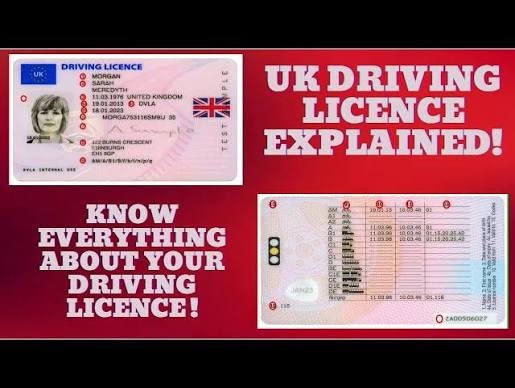
Although there are many driving licence codes recognised by the DVLA, only a small number are commonly seen on UK photocard licences. Understanding what these codes mean can help you avoid misunderstandings and ensure you comply with the conditions attached to your driving entitlement.
Code 01 – Eyesight Correction Required
Code 01 indicates that you must wear corrective lenses while driving. This means you are legally required to wear prescription glasses or contact lenses if they are necessary for you to meet the minimum eyesight standard for driving.
If you are stopped by the police or involved in a road traffic collision while not wearing your required corrective lenses, you could face legal consequences. Regular eye examinations are recommended to ensure your prescription remains suitable for driving.
Code 02 – Hearing or Communication Aid
Code 02 is issued to some drivers who require a hearing or communication aid while driving. This code is less common than Code 01 but serves the same purpose of ensuring that any necessary equipment is used to maintain safe driving.
Drivers with this code should ensure that any prescribed hearing aid is functioning correctly before driving.
Codes 10 to 44 – Vehicle Adaptations
The DVLA uses several codes between 10 and 44 to indicate that a driver must use a vehicle fitted with specific adaptations. These adaptations are usually required because of a medical condition or physical disability.
For example, certain drivers may need modified gear controls, specially adapted braking systems or steering wheel modifications. Others may require altered clutch controls or hand-operated accelerator systems.
These codes help ensure that drivers can continue driving safely while accommodating individual medical needs.
Code 15 – Modified Clutch
Code 15 indicates that the vehicle must be fitted with a modified clutch. This adaptation is often required by drivers who cannot safely operate a standard clutch pedal due to a physical disability or reduced mobility.
The DVLA will normally require a driving assessment before issuing this restriction.
Code 20 – Modified Braking System
Drivers with Code 20 must use a vehicle equipped with an adapted braking system. Depending on the driver’s needs, this may include hand-operated brakes or other specialist braking equipment designed to improve vehicle control.
These modifications allow many individuals with physical disabilities to continue driving independently.
Code 25 – Modified Accelerator
Code 25 requires the driver to use a vehicle fitted with a modified accelerator system.
Accelerator adaptations vary according to individual needs and may include left-foot accelerators, hand-operated controls or electronically assisted systems.
The adaptation specified will depend upon recommendations made during the driver’s medical or mobility assessment.
Code 35 – Modified Control Layout
Some drivers require changes to the location of vehicle controls to operate the vehicle safely.
Code 35 indicates that certain controls have been repositioned or modified to suit the driver’s physical requirements.
These adaptations are individually assessed to ensure the vehicle can be operated safely and comfortably.
Code 40 – Modified Steering
Code 40 applies when a driver must use specially adapted steering equipment.
Examples include steering knobs, reduced-effort steering systems or other approved modifications designed to assist drivers with reduced upper body strength or mobility.
The exact adaptation depends on the individual’s medical circumstances.
Code 78 – Automatic Vehicles Only
Code 78 is one of the most recognised restrictions on UK driving licences.
If your licence includes Code 78, you are only permitted to drive vehicles with an automatic transmission. This restriction usually applies to drivers who passed their practical driving test in an automatic vehicle.
If you later wish to drive manual vehicles, you must successfully pass another practical driving test in a manual car before the restriction can be removed.
Many new drivers mistakenly believe that Code 78 is permanent. In reality, it can be removed once you obtain the appropriate manual driving qualification.
Code 79 – Restricted Vehicle Categories
Code 79 indicates that the driver is restricted to specific types of vehicles within a licence category.
There are several variations of Code 79 depending on the vehicle entitlement involved. For example, some drivers may be entitled to operate only certain motorhomes, tricycles or other specialised vehicle types.
The precise meaning depends on the additional wording that accompanies the code on the driving licence.
Code 96 – Vehicle and Trailer Combination
Code 96 applies mainly to drivers who tow trailers.
This code allows certain combinations of vehicles and trailers where the combined maximum authorised mass exceeds standard Category B limits but remains below higher trailer entitlement thresholds.
Drivers intending to tow caravans, horseboxes or commercial trailers should ensure they understand exactly what their licence permits before travelling.
Code 101 – Not for Hire or Reward
Code 101 indicates that the driver may operate the relevant vehicle category only for private purposes.
The vehicle must not be used for commercial hire, passenger transport or reward unless additional entitlement has been obtained.
This code commonly appears on certain vocational licence categories.
Code 115 – Organ Donor
Historically, some licences included Code 115 to indicate organ donor status.
Today, organ donation is generally managed through the NHS Organ Donor Register rather than driving licence codes. Nevertheless, older licences may still display this code in certain circumstances.
How Are Licence Codes Added?
Driving licence codes are usually added following one of three situations.
The first occurs after a practical driving test, where the type of vehicle used determines certain driving entitlements.
The second involves medical assessments carried out by the DVLA following notification of a medical condition or disability.
The third arises when specialist driving assessments recommend vehicle adaptations to allow safe driving.
Once a code has been added, it becomes part of your legal driving entitlement until the DVLA authorises its removal.
Can Licence Codes Be Removed?
Yes. Some driving licence codes can be removed if the reason for the restriction no longer applies.
For example, a driver with Code 78 may remove the automatic-only restriction by passing a practical driving test in a manual vehicle.
Medical restriction codes may also be reviewed if your medical condition improves. In such cases, the DVLA may request updated medical evidence before making a decision.
Drivers should never assume a restriction has been removed until they receive official confirmation from the DVLA and an updated driving licence where appropriate.